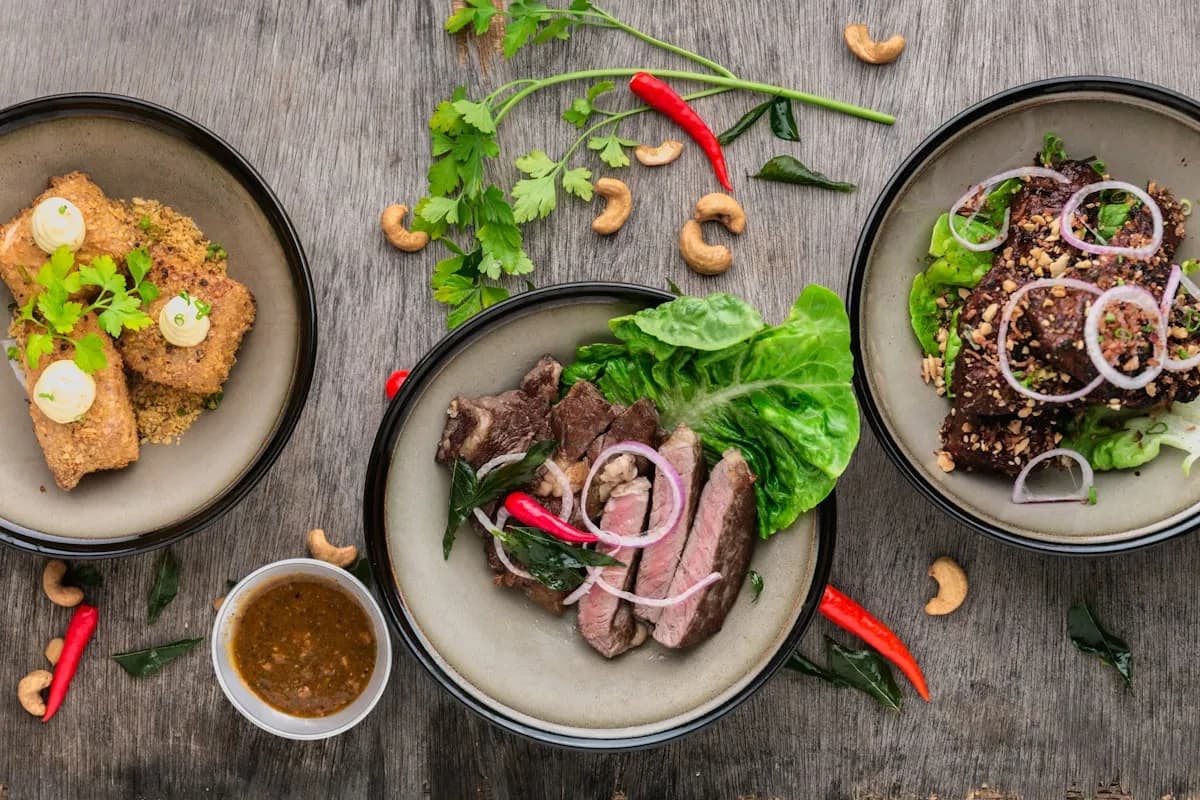
I've eaten at Michelin-starred restaurants in Tokyo and Paris. They were excellent. But the meal I think about most is a plate of char kway teow I ate standing up at a hawker stall in Georgetown, Penang. It cost about $1.50. The woman cooking it didn't look at me once -- she was too focused on the wok. The noodles were smoky and slightly charred and absolutely perfect. No menu, no ambiance, no wine pairing. Just the best thing I've eaten in my life, served on a plastic plate.
Street food cities operate on a different logic than restaurant cities. The competition isn't about decor or service -- it's pure flavor, passed down through families or perfected over decades of cooking the same three dishes on the same corner. When a stall has been making one thing for thirty years, it tends to be very, very good at that one thing.
Here are the cities where I'd pick the sidewalk over the dining room every single time.
Bangkok, Thailand
Bangkok is the gateway drug. For a lot of travelers, it's where you first realize that the best food in a city doesn't come from restaurants -- it comes from a cart on a side street where someone's been wok-frying noodles since before you were born.
Where to go: Yaowarat (Chinatown) after dark is the main event. The whole street becomes a sprawling open-air food hall. Start with the seafood stalls near the Chinatown gate and work your way down. Victory Monument area is more local and less tourist-focused, with clusters of stalls serving specific dishes -- one does only boat noodles, the next does only grilled pork.
What to eat: Pad kra pao (stir-fried holy basil with meat and a fried egg on rice) is the dish Bangkok runs on. It's available everywhere, it costs 40-60 baht ($1-1.70), and every stall makes it slightly differently. Mango sticky rice is the obvious dessert and it's obvious for a reason -- sweet, rich, coconutty. Som tum (green papaya salad) should come with a spice warning if you ask for Thai-level heat. And guay tiew (noodle soup) from any stall with a line at lunchtime.
Budget: $1-2 per dish. You can eat extremely well three times a day for under $10.
Mexico City, Mexico
Mexico City's street food scene is deeper than Bangkok's in some ways, because it's not just tacos -- though the tacos alone would put it on this list. It's a city where every neighborhood has its own food identity, and the best stuff is being cooked on portable grills by people who've been at the same intersection for decades.
Where to go: You can't walk three blocks without hitting a taco stand, but for concentrations: the tacos al pastor at El Vilsito (a mechanics' shop that turns into a taco stand at night) are legendary. For market food, Mercado de San Juan has everything from exotic meats to the best quesadillas you'll find. Mercado de Jamaica is less touristy and excellent for a cheap lunch surrounded by flowers.
What to eat: Tacos al pastor -- pork shaved off a vertical spit, pineapple on top, on a small corn tortilla. I could eat these every day and did for about two weeks. Elotes (grilled corn slathered with mayo, chili, and lime) from a street cart. Tlacoyos (thick oval tortillas stuffed with beans or cheese) at market stalls. And tamales in the morning from the women selling them from big steaming pots outside metro stations -- they're the city's breakfast of choice and they cost about 15-20 pesos ($0.80-1).
Budget: $0.50-1 per taco. A full, unreasonable amount of food runs about $5-8/day.
Penang, Malaysia
I'm going to say something I stand behind completely: Penang might be the greatest food city on earth. Not the fanciest, not the most innovative -- the greatest for pure eating pleasure per dollar spent. The hawker stall culture here is so deep and so competitive that bad food literally cannot survive.
Where to go: Georgetown's hawker centers are the backbone. Gurney Drive Hawker Centre is the famous one and it's famous for a reason. New Lane (Lorong Baru) is my personal favorite -- less polished, better food, packed with locals after dark. Chulia Street Night Hawker Stalls are walkable from most Georgetown hostels. For a more local experience, head to Air Itam market near Kek Lok Si temple.
What to eat: Char kway teow (stir-fried flat noodles with shrimp, Chinese sausage, egg, and bean sprouts, cooked over blazing-hot charcoal) is the signature. Assam laksa -- a sour, fish-based noodle soup that's intense and addictive. Nasi kandar (rice with various curries poured over it, originating from the Mamak community). Hokkien mee (prawn noodle soup). Rojak (fruit and vegetable salad with thick dark sauce). I could keep going. Every hawker center has twenty things worth ordering.
Budget: RM5-10 per dish ($1-2.20). You'll eat like royalty for under $8/day.
Istanbul, Turkey
Istanbul's street food hits different because it's so casual and so embedded in daily life. People eat on the move here -- grabbing a simit walking to work, eating a fish sandwich on the waterfront, folding a lahmacun in half while crossing the street. It's fast, cheap, and never feels like a "foodie experience." It's just how people eat.
Where to go: The Galata Bridge area for balik ekmek (grilled fish sandwiches sold from boats rocking on the water -- the fish is cooked right on the boat and served with onion and lettuce in bread). Karakoy for the best simit bakeries. Sultanahmet and Eminonu have the classic tourist-area stands, but cross the Golden Horn to Kadikoy's market streets for the real action.
What to eat: Balik ekmek is non-negotiable -- a grilled mackerel sandwich that costs about 80-100 TL ($2.50-3) and tastes like the sea. Simit (sesame-crusted bread rings) for about 15-20 TL from a cart, perfect for breakfast. Lahmacun (thin flatbread with spiced meat, rolled up with lemon and parsley) -- better than any pizza you've had recently. And if you're feeling adventurous, kokoreç -- seasoned lamb intestines on bread. It sounds challenging. It's delicious. Trust me or don't, but at least try it once.
Budget: $5-10/day for three meals of street food. Istanbul is still remarkably affordable for eating out.
Marrakech, Morocco
I'll be honest: Jemaa el-Fnaa, the famous main square, has some of the most aggressive food touts you'll encounter anywhere. The stalls in the middle of the square will pull you in, seat you down, and charge tourist prices for mediocre food. That's the reality.
But here's the thing -- there's genuinely excellent food in Marrakech if you know where to look, and some of it is even in the square if you pick the right stalls.
Where to go: In Jemaa el-Fnaa, the snail soup stalls (look for the carts with big steaming pots) are authentic and cheap -- locals eat there, which is always a good sign. The fresh orange juice stalls are everywhere and cost about 5-10 MAD ($0.50-1). For better food with less hassle, head into the side streets of the medina. Rue Bab Agnaou has solid street food. The mellah (old Jewish quarter) has its own food stalls that tourists rarely find.
What to eat: Tagine from a hole-in-the-wall -- slow-cooked stew served in the conical clay pot. Msemen (flaky, pan-fried flatbread, often for breakfast with honey). Harira (tomato and lentil soup, especially during cooler months). Mechoui (slow-roasted lamb from the stalls near Bab Doukkala). And the orange juice -- honestly, four or five fresh-squeezed oranges for less than a dollar. I drank three glasses a day.
Budget: 30-80 MAD per meal ($3-8). Cheap even by street food standards.
Osaka, Japan
Tokyo gets the Michelin stars, but Osaka calls itself "Japan's kitchen" and backs it up on every street corner in Dotonbori. The culture here is literally called kuidaore -- "eat until you drop." That's not a tourism slogan. That's how people in Osaka actually approach food.
Where to go: Dotonbori is the obvious start -- loud, neon-lit, packed with food stalls and restaurants. It's touristy but the quality is still high because Osaka doesn't tolerate bad food even in tourist zones. Shinsekai is grittier and more local, the spiritual home of kushikatsu. Kuromon Market ("Osaka's Kitchen") is excellent for seafood, especially in the morning.
What to eat: Takoyaki (octopus balls) -- crispy outside, molten inside, topped with sauce and bonito flakes. Every stall claims to be the best. Try three and decide for yourself. Okonomiyaki (savory pancake layered with cabbage, meat, noodles, and a dozen toppings) -- Osaka-style is mixed together, not layered like Hiroshima-style. Kushikatsu (deep-fried skewers of everything imaginable) in Shinsekai -- the rule is you only dip once in the communal sauce, and they take this rule very seriously.
Budget: 300-800 yen per item ($2-5.50). A full Osaka street food crawl runs about $12-18.
Lima, Peru
Lima's street food doesn't get the attention it deserves outside South America. Peruvian food is having a moment in fine dining, but the street-level version has been excellent for generations and costs almost nothing.
Where to eat: The cevicherias that operate out of market stalls in Surquillo market serve ceviche that's as good as anything in a Miraflores restaurant at a fraction of the price. Street carts in the historic center sell anticuchos (beef heart skewers -- better than they sound, smoky and tender) in the evenings. Picarones (sweet potato and squash doughnuts drizzled with chancaca syrup) show up at night markets and they're incredible.
Budget: 8-20 PEN per dish ($2-5). A filling street food meal costs about $4-6.
Kolkata, India
Indian street food could fill an entire book -- Delhi's Chandni Chowk alone is overwhelming -- but I'm picking Kolkata because the chaat and snack culture there is a level above anywhere else I've eaten in India, and the prices are genuinely absurd.
Where to go: Park Street and New Market area for a concentration of stalls. The streets around College Street are excellent for cheap snacks between bookshops. Vivekananda Park in the evening turns into an informal food market.
What to eat: Puchka (Kolkata's version of pani puri -- hollow crispy shells filled with spiced water, tamarind, and potato). The experience of eating six in rapid succession from a street vendor is a kind of performance art. Kathi rolls (paratha wrapped around spiced kebab meat, onions, and chutney) -- Nizam's in New Market claims to have invented them, and theirs are still excellent. Jhalmuri (puffed rice with spices, mustard oil, and vegetables) tossed together in a newspaper cone. And mishti doi (sweet yogurt) from any sweet shop -- Kolkata's dessert game is unmatched.
Budget: 20-80 INR per item ($0.25-1). You can eat all day for about $3-5.
How to Eat Street Food Without Getting Sick
This is the practical section. I've eaten street food on every continent except Antarctica and I've gotten properly sick exactly twice in fifteen years. Here's what I do:
Follow the crowd. If a stall has a line of locals, the food is fresh and the turnover is high. High turnover means nothing has been sitting around. The stall with no customers has food that's been there a while.
Watch the cook. Are they cooking to order? Good. Is the food pre-made and sitting under a heat lamp? More risk. Freshly cooked, served hot, eaten immediately -- that's the safe play.
Avoid raw things until your stomach adjusts. Cooked food from a hot wok or grill is almost always fine. Raw vegetables, salads, and unpeeled fruit carry more risk. Ice is a judgment call -- in Bangkok and Mexico City, the ice is commercially made and safe. In smaller towns, skip it for the first few days.
Eat where locals eat. This isn't just about finding good food -- it's about food safety. A stall that feeds the neighborhood every day can't afford to make people sick. The stall targeting one-time tourists has less incentive.
Ease in. If you're arriving from a place with very different food, don't eat the spiciest street food on day one. Give your stomach a few days to adjust. Start mild. Work your way up.
The truth is, street food from a busy stall is often safer than a restaurant kitchen you can't see. The cooking happens right in front of you. You can watch the hygiene, the freshness, the process. That transparency is worth more than a restaurant's health certificate on the wall.