The moment I stepped off the bus in Siem Reap, a wall of tuk-tuk drivers materialized. Not one or two -- maybe fifteen guys, all shouting prices, all holding up laminated cards with temple tour packages. I hadn't even found my bag yet. My first thirty seconds in Cambodia were spent trying to politely decline a ride while dragging a backpack through a cloud of dust and diesel fumes.
It was overwhelming and kind of wonderful and set the tone for the entire country.
Angkor Wat: Yes, Go
I'm not going to pretend to be too cool for Angkor Wat. The temple complex is extraordinary. The scale of it, the detail in the stone carvings, the fact that this was built in the 12th century -- it earned its reputation.
But here's what nobody tells you: the classic sunrise photo at Angkor Wat involves standing shoulder-to-shoulder with several hundred people at 5am, many of them holding iPads above their heads. If you've seen the Instagram shots with the perfect reflection in the moat and nobody else around, that's either a very old photo or a very patient Photoshop job.
My advice: skip the sunrise on your first day. Start with the smaller temples instead. Ta Prohm, the one with the trees growing through the ruins, is incredible early in the morning before the big groups arrive. Bayon, with its massive stone faces, is best in the late afternoon light. Save Angkor Wat main temple for sunset or for early morning on your second day when you've gotten your bearings.
Buy the three-day pass for $62. The one-day pass ($37) forces you to rush. With three days you can take your time, come back to favorites, and actually enjoy it instead of turning it into a temple-checking speedrun. Bring at least two liters of water per day. The heat inside the complex is brutal, and shade is inconsistent.
Siem Reap After Dark
The town itself surprised me. I expected a temple staging ground and found a proper little city with personality. Pub Street is exactly what it sounds like -- a strip of bars with cheap beer and loud music. Draft beers go for about $0.50, which creates a predictable atmosphere. It's fun for a night, maybe two, and then you'll want to find the quieter spots.
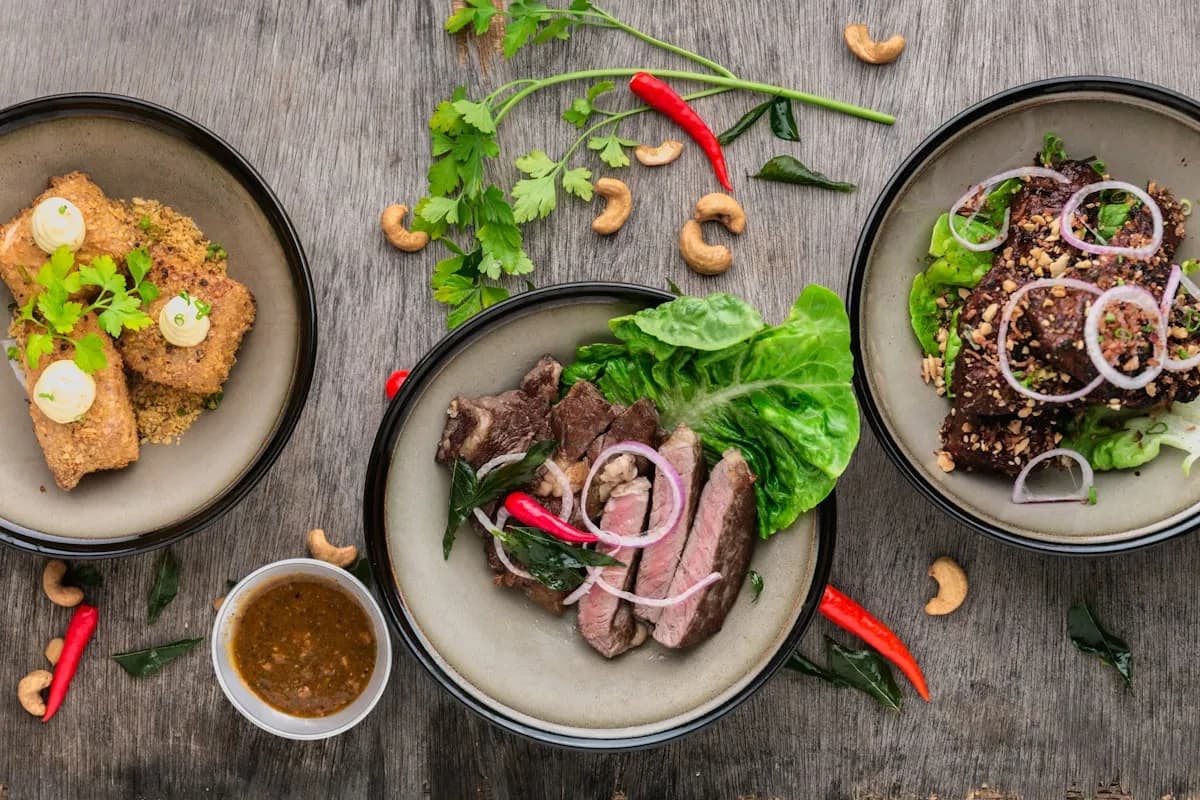
The night market is worth walking through for the food stalls alone. Amok (fish curry steamed in banana leaf) is the dish to try if you eat one Cambodian thing. The restaurants along the river, slightly away from the tourist center, serve better food at similar prices with actual Cambodian families eating there, which is usually a reliable indicator.
There's also a surprisingly good cafe scene now, with places like Little Red Fox and Sister Srey serving real coffee in air-conditioned rooms. Five years ago this didn't exist.
Phnom Penh: The Capital Most People Skip
A lot of travelers fly into Siem Reap, do the temples, and fly out. They miss Phnom Penh entirely, which is a mistake.
The capital is loud, chaotic, and full of motos weaving through traffic in ways that defy physics. It's also where you feel the pulse of modern Cambodia. The riverside promenade at sunset is genuinely lovely. The Russian Market (Toul Tom Poung) is the best place in the country for picking up clothes, souvenirs, and street food. The Central Market's art deco dome is worth seeing just as architecture.
The food scene in Phnom Penh has exploded. There are proper restaurants now serving modern Cambodian cuisine alongside the street food stalls. You can eat extremely well for $3 to $5 a meal.
But the reason Phnom Penh stays with you isn't the food or the markets. It's the history.
The Weight of History
I'm not going to tell you that visiting Tuol Sleng Genocide Museum and the Killing Fields at Choeung Ek is enjoyable, because it isn't. It's one of the most difficult things I've done as a traveler. The audio tour at the Killing Fields is narrated by a survivor, and there are moments where you'll need to stop walking and just stand there for a minute.
The Khmer Rouge killed an estimated 1.5 to 2 million Cambodians between 1975 and 1979. That's roughly a quarter of the entire population. This happened within living memory -- you will meet people whose parents or grandparents survived it. The sites don't let you look away from what happened, and they shouldn't.
Go. It's important. Give yourself the whole morning. Don't schedule anything fun immediately afterward because you won't feel like it. And approach it with the respect it deserves -- this isn't a photo opportunity, it's a memorial.
Entry is $5 for Tuol Sleng and $6 for the Killing Fields (audio guide included). They're on opposite sides of the city, so budget a tuk-tuk for both trips.
Kampot: The Slow One
After the intensity of Phnom Penh, Kampot felt like exhaling. It's a small riverside town in the south, about three hours from the capital by bus, and it moves at a pace that makes Siem Reap look frantic.
Kampot is famous for its pepper, and visiting a pepper plantation is one of those things that sounds boring until you do it. Kampot pepper is considered some of the best in the world -- chefs in fancy restaurants use it specifically. The tours explain why, and you'll leave with bags of the stuff and a new opinion about seasoning. La Plantation is the most popular tour and costs around $8 including transport from town.
The river in Kampot is perfect for lazy sunset cruises. A couple of dollars gets you on a small boat with a cold beer as the sun drops behind the mountains. Bokor Hill Station, about 40 minutes up a winding road, is a half-ruined French colonial retreat sitting in clouds at the top of a mountain. It's atmospheric in a way that feels accidental.
Kampot is also where a lot of digital nomads have quietly set up. The wifi is decent, the cost of living is absurdly low, and the expat community is just big enough to not feel lonely.
The Islands
Cambodia has beaches. Most people don't expect this.
Koh Rong is the bigger island -- backpacker bars, cheap accommodation, parties on the beach. It's what Thailand's islands were twenty years ago, for better and worse. Koh Rong Samloem is the quieter sibling, with fewer places to stay and more actual relaxation. If you want to disconnect, Samloem is the move.
Getting there involves a ferry from Sihanoukville, which takes about 45 minutes to an hour. Sihanoukville itself has changed dramatically due to massive Chinese development -- it's mostly construction sites and casinos now. Don't linger. Get on the ferry and go.
The islands are still relatively undeveloped compared to Southeast Asian standards, but that's changing fast. If you want to see them before they become the next Koh Phangan, sooner is better than later. Basic bungalows run about $15 to $30 a night. Bring cash -- ATMs are unreliable on the islands.
Battambang: The One Nobody Visits
About three hours northwest of Siem Reap, Battambang is what Cambodia feels like without tourists. It's a real working town with colonial architecture, good food, and temples you can explore completely alone.
The bamboo train -- a wooden platform on wheels that runs along old railway tracks -- is mostly a tourist novelty now, but it's still weirdly charming. The temples around Battambang, particularly Phnom Sampeau and Wat Ek Phnom, have none of the crowds of Angkor but plenty of atmosphere. Phnom Sampeau also has a dark history: it contains caves used as killing sites during the Khmer Rouge era.
The Tonle Sap floating villages are accessible from Siem Reap and are worth the half-day trip. Entire communities live on the water -- houses, schools, shops, all floating. It challenges your assumptions about how life can be structured. Book through a responsible tour operator, not the guys hustling outside your hotel, because some of the cheaper tours take you to villages that have become essentially tourist traps where kids ask for money.
The Practical Stuff
Visa: Available on arrival at airports and land borders for $30. Bring a passport photo or pay an extra $2 for them to take one. You can also get an e-visa online beforehand, which sometimes speeds up the process.
Money: The US dollar is the de facto currency. Almost everything is priced in dollars and you'll pay in dollars. Cambodian riel is used for amounts under a dollar -- so your change from a $3 purchase might come back as $1 and 8,000 riel. It's confusing at first but you get used to it. ATMs dispense dollars and charge about $5 per withdrawal, so take out larger amounts.
Getting around: Roads between major cities have improved a lot, but some stretches are still rough. The bus from Phnom Penh to Siem Reap takes about 6 hours and is surprisingly comfortable for around $10 to $15. Grab works in Phnom Penh and Siem Reap, and it's the easiest way to get around cities. Elsewhere, negotiate tuk-tuk prices before you get in.
Scams: They exist but Cambodia isn't worse than most of Southeast Asia. The main ones are inflated tuk-tuk prices (agree on the price first), fake orphanages soliciting donations (don't visit orphanages, full stop), and the occasional rigged card game. Use common sense and you'll be fine.
Why Cambodia Is Different
I've traveled through most of Southeast Asia, and Cambodia occupies its own space. Thailand is easier. Vietnam is more dramatic. Laos is quieter. But Cambodia has this quality that I can only describe as rawness. The history is right there on the surface. The development is happening in real time. The contrast between the ancient temples and the half-built construction projects is constant.
People kept telling me Cambodia would be "like Thailand but cheaper." It's not. It's its own thing entirely -- heavier, more complicated, more honest in some ways. The kind of place where you eat a great meal for two dollars and then pass a building with bullet holes in the walls, and both of those things are just Tuesday.
It's not comfortable travel, not always. But it gets under your skin in a way that more polished destinations don't. I left planning to come back, which is about the highest compliment I can give a country.