We have a complicated relationship with Bali. The southern tourist corridor—Kuta, Seminyak, increasingly Canggu—can feel like a theme park version of Indonesia. Traffic jams, overpriced smoothie bowls, Instagram influencers doing yoga poses in front of anything photogenic. Even Ubud, which people describe as "the spiritual heart of Bali," has stretches that feel more like a wellness shopping mall than a Balinese village.
And yet. Drive an hour in the right direction and you're standing in a rice terrace with no one else around. The morning mist is rolling off a volcanic ridge. A farmer waves at you from across a field. A temple ceremony is happening and nobody's filming it.
Bali is a small island with an enormous range. The trick is getting past the parts that every algorithm promotes to every tourist, and into the places that still feel like the Bali people fell in love with decades ago. Most of these spots aren't secrets—locals know them, guidebooks mention them—but they require a scooter, a willingness to deal with rougher roads, and the understanding that "basic infrastructure" means exactly that.
Here's where we'd point you if you've already done the southern beaches and Ubud rice terrace walks and want to see what else is out there.
Quick Geography
The tourist core clusters in three areas: south Bali (Kuta, Seminyak, Canggu) for beaches and nightlife, central Ubud for rice terraces and yoga, and Sanur on the east coast for a calmer beach scene.
Everything we're covering here is outside that triangle. North, east, west, and up into the highlands. Each region has a different feel, and honestly, any of them is worth at least a night or two.
The North
Munduk
This is what Ubud used to be. A mountain village with terraced fields, misty mornings, and actual quiet. Guesthouses cling to hillsides with views down into green valleys. The temperature is cooler up here—you'll want a light jacket at night, which is a welcome change from the coastal sweat.
The waterfalls around Munduk are excellent (Munduk and Melanting are the main ones). There are coffee and clove plantation walks if you're into that. And the twin lakes—Buyan and Tamblingan—are gorgeous from the viewpoints along the ridge road. Accommodation runs $20-40 a night for a guesthouse with valley views.
Lovina
The north coast's main town, and nothing like the south. Black sand beaches, calm water, a handful of dive shops, and prices that feel like Bali ten years ago. The dolphin-watching boats go out at sunrise—it's a bit of a tourist production, but the dolphins reliably show up.
The real draw is the pace. Lovina is slow. The Instagram crowd hasn't arrived. Budget travelers and divers who don't need a scene will like it here.
Singaraja
Bali's second-largest city and former colonial capital. The city itself isn't a destination, but the surrounding area has some worthwhile stops. Pura Beji, a moss-covered temple nearby, is striking. Gitgit waterfall is easily accessible, though it gets tour bus traffic.
The East
Sidemen Valley
Arguably the most beautiful landscape in Bali, and still remarkably untouristed. Rice terraces cascade down hillsides with Mount Agung as the backdrop. Traditional weaving villages produce some of Bali's finest textiles.
You can do rice terrace walks (guided or on your own), visit weaving workshops, or just sit on your guesthouse balcony and stare at the mountain. It's one of those places where doing nothing feels productive. Simple guesthouses and a few boutique hotels with valley views are the accommodation options.
Tirta Gangga
A former royal water garden with stone fountains, pools, and surrounding rice terraces. It's one of the most photogenic spots on the island and significantly less crowded than equivalent attractions in the south. Visit early morning or late afternoon for the best light and fewest people. The spring-fed pools are cold but refreshing on a hot day. The rice terrace walks around the site are worth an hour or two.
Amed
A string of fishing villages along the east coast, Amed is where divers come for the Japanese shipwreck and snorkelers come for easy reef access straight off the beach. Everyone else comes for the sunrise views and the relief of being somewhere that doesn't feel like a tourist factory.
The vibe is laid-back in a way that Canggu pretends to be but isn't. Accommodation is basic to mid-range. The traditional salt production along the beach—sea water evaporated in shallow troughs—is interesting to see.
The Central Highlands
Bedugul and Lake Bratan
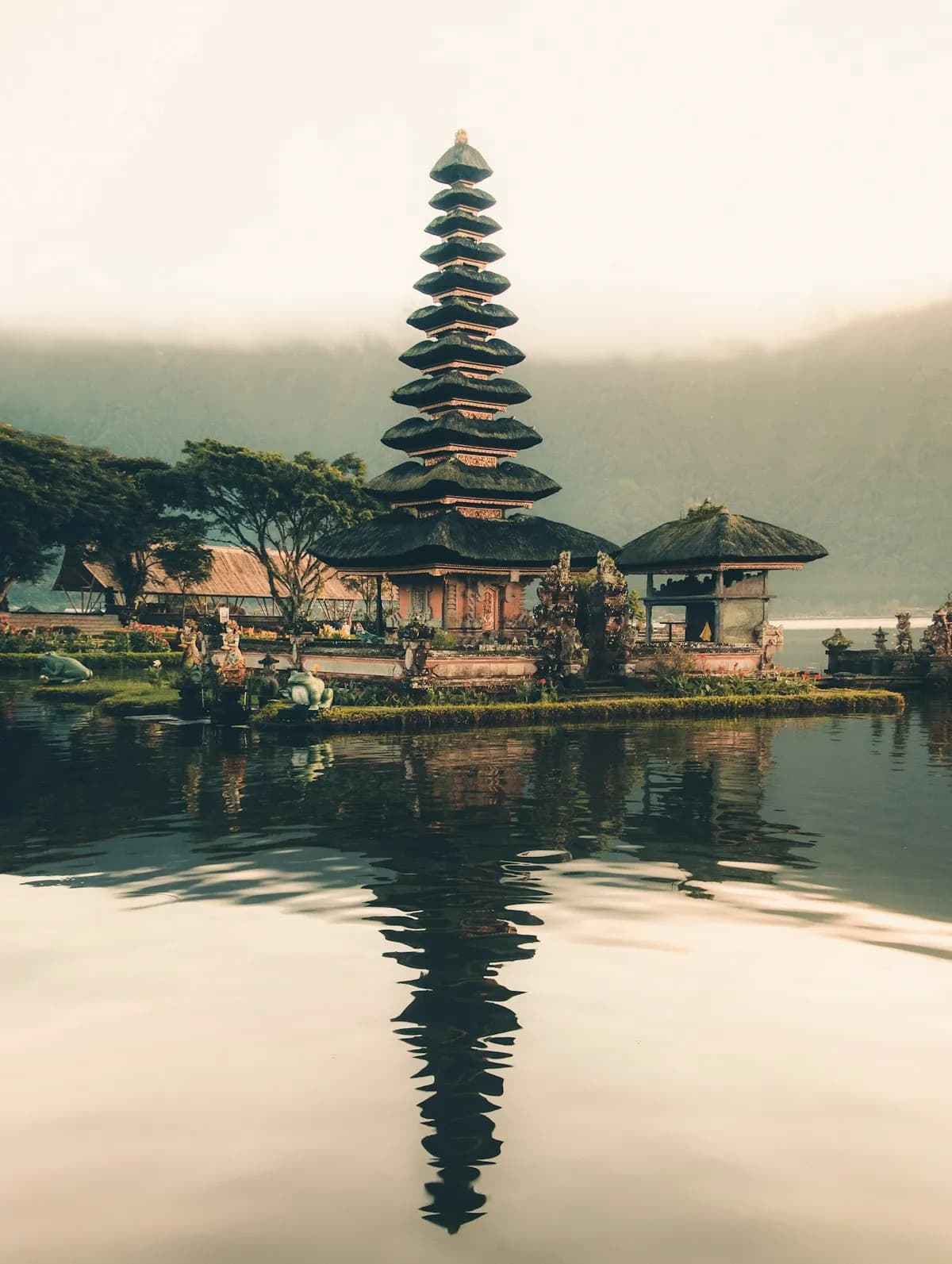
The Ulun Danu Bratan temple, which appears to float on the lake, is one of those images that shows up on every Bali postcard. It's worth seeing in person, but arrive early—tour buses start rolling in by mid-morning.
Beyond the temple, the Bali Botanic Garden has an excellent collection and enough space that it never feels crowded. The traditional market at Candikuning is good for produce and cheap eats. The whole area sits high enough to be genuinely cool, which your sweat glands will appreciate.
Kintamani and Mount Batur
The Batur caldera is Bali's most accessible volcano experience. The sunrise trek to the summit is popular—possibly too popular, as you'll be climbing with dozens of other groups—but it's memorable. If the idea of a pre-dawn group hike doesn't appeal, an afternoon visit for caldera views works too. The hot springs at Toya Bungkah are great on weekdays, overcrowded on weekends.
One warning: Kintamani village itself is a tourist trap. View the caldera from there, but stay in surrounding villages instead.
The West
Medewi
A mellow point break on the west coast that attracts surfers escaping Canggu's crowds. Accommodation is basic, food is local, and tourism infrastructure is minimal. That's the appeal. If you're an intermediate-to-advanced surfer who wants waves without the scene, or a budget traveler looking for un-Instagrammed Bali, this is it.
Jembrana and Negara
Very few tourists come out here. The main draw is traditional bull racing (makepung) from August to October—a spectacle that has nothing to do with tourism and everything to do with local culture. West Bali National Park offers hiking and birdwatching. Don't come expecting restaurants with English menus or reliable WiFi. That's sort of the point.
Cultural Stops
Tenganan Village is one of Bali's original Bali Aga (pre-Hindu) communities. Residents maintain ancient traditions and produce rare double-ikat textiles. It gets some tourist traffic now but remains genuinely distinctive.
Penglipuran Village is a beautifully preserved traditional village with identical bamboo-roofed houses. It's maintained partly for tourism, but it's well done and worth a visit.
Trunyan Village, across Lake Batur and accessible only by boat, practices unique open-air burial. Visit respectfully or not at all.
Better Waterfalls
Skip Tegenungan (overcrowded) and head to these instead:
Sekumpul is probably Bali's most stunning waterfall—multiple cascades in a jungle setting, requires a proper hike to reach. Absolutely worth the effort.
Nungnung is a dramatic single drop with far fewer visitors than southern alternatives. The staircase down is steep and the climb back up is a workout.
Tibumana is easy to access, has a lovely swimming pool at its base, and hasn't been overwhelmed by crowds yet.
Banyumala Twin features two streams meeting in a pristine pool. The road in is rough, but that keeps the visitor numbers down.
Temples Beyond the Famous Ones
Tanah Lot and Uluwatu get all the attention, but a few others are worth the detour. Pura Lempuyang (the "Gates of Heaven" Instagram spot) is beautiful during off-hours. Goa Gajah, the elephant cave, is touristy but historically significant. Pura Kehen in Bangli has beautiful architecture and much less traffic. Gunung Kawi, with its ancient rock-cut shrines in a river valley, is magical at sunrise.
Practical Stuff
Getting Around
A scooter is essential for most of these places. You technically need an international license, and you definitely need proper insurance. If scooters aren't your thing, hiring a driver for $40-60 per day gets you comfortable exploration with someone who knows the roads. Whichever you choose, plan to stay overnight—these areas deserve more than a rushed day trip.
When to Go
Dry season (April-October) is better for hiking and outdoor activities. Wet season (November-March) means more impressive waterfalls and lower prices, but some roads get treacherous. Early mornings beat the tour buses regardless of season.
What to Expect
Outside the tourist zones, infrastructure gets basic. English is less common, food options are limited (but authentic), and power and WiFi can be spotty. Embrace it. The trade-off is getting to experience a side of Bali that most visitors never see.
Sample Itinerary
5 Days
Day 1: Arrive in Sidemen. Rice terrace walk, weaving village visit. Day 2: Morning at Tirta Gangga, afternoon snorkeling in Amed. Day 3: Pre-dawn Mount Batur sunrise trek, hot springs, drive to Munduk. Day 4: Munduk waterfalls, coffee plantation tour. Day 5: Bedugul lake temple, then head back south or keep going.
3 Days (Quick Version)
Day 1: Sidemen—terraces and village life. Day 2: Sekumpul waterfall, then Munduk for the night. Day 3: Bedugul and return south.
Tourism has changed a lot of Bali, but the island's real character is still there if you go looking for it. The roads get rougher, the tourist comforts thin out, and the rewards make it all worth it.