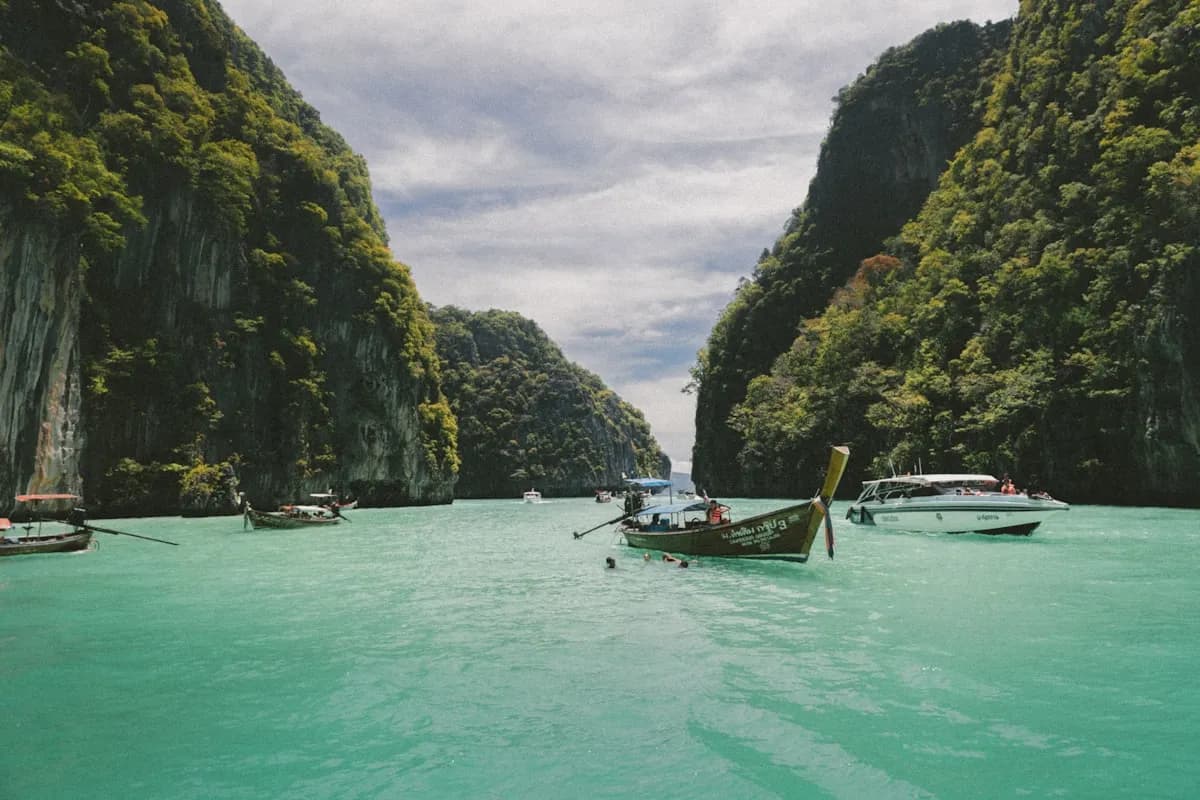
Thailand has more islands than most people realize. Somewhere around 1,400 of them, depending on who's counting and whether you include the rocks that barely poke out of the water at high tide. The good news is that only a couple dozen are really set up for tourists, so you don't need to sort through all of them.
The tricky part is that the islands vary wildly. Some of them are basically open-air nightclubs floating in the Andaman Sea. Others are so quiet you can hear yourself think for the first time in months. A few manage to be both, depending on which beach you're on. We've spent a lot of time bouncing between these places, and the single biggest mistake we see people make is treating "Thai islands" as one experience. They're not. Koh Tao and Phuket have about as much in common as a dive bar and a shopping mall.
The other thing worth knowing upfront is that the two coasts have opposite weather patterns. The Andaman side (west coast) gets hammered with rain from May through October, while the Gulf side (east coast) takes its turn from roughly November through January. This means you can almost always find a sunny island somewhere in Thailand, as long as you're flexible about which coast you're on. January through April is the sweet spot when both sides cooperate.
So here's the breakdown, island by island, with honest takes on who should go where and what you'll actually find when you get there.
The Gulf Islands (East Coast)
The three main Gulf islands—Koh Samui, Koh Phangan, and Koh Tao—sit in a neat line and are connected by regular ferries. You can easily hit all three in a week.
Koh Samui
The most developed of the bunch. It has its own international airport, which makes getting there painless but also means it attracts a resort-hotel crowd. If you want a Thai island experience with air conditioning and room service, Samui delivers.
Chaweng is the main tourist beach—busy, loud, convenient. Lamai is a step down in intensity but still has nightlife. Bophut's Fisherman's Village area is the one we'd pick for a more interesting stay, with boutique hotels and a waterfront that hasn't been completely sanitized for tourists.
Off the beach, Ang Thong Marine Park makes for a great day trip, and the Big Buddha Temple is worth a quick visit. Namuang Waterfalls are nice if you need a break from sand.
Samui is best for families, couples who want comfort, and anyone who considers "roughing it" to mean a hotel without a pool.
Koh Phangan
Everyone knows Phangan for the Full Moon Party, and honestly, that reputation overshadows everything else about the island. Yes, Haad Rin fills with something like 30,000 people once a month for what can only be described as organized chaos. It's on a lot of bucket lists. Whether it should be on yours depends on how you feel about neon body paint and bass drops at 4 AM.
But Phangan beyond Haad Rin is a different island entirely. Bottle Beach is only reachable by boat and feels properly remote. Thong Nai Pan has two gorgeous bays with a laid-back vibe. Srithanu has turned into a full-on yoga and wellness community—smoothie bowls, sound baths, the whole deal. If you want variety on a single island, Phangan is hard to beat.
Koh Tao
The smallest of the three Gulf islands, and arguably the best if you have any interest in diving. Koh Tao is one of the cheapest places in the world to get certified, the dive schools are professional, and the marine life is legitimately impressive. Sail Rock might be the best dive site in Thailand, and at Chumphon Pinnacle you've got a shot at seeing whale sharks.
Even if diving isn't your thing, the snorkeling at Shark Bay (yes, there are blacktip reef sharks, no, they won't bother you) is excellent, and Sairee Beach is a solid place to watch the sun go down with a beer.
Budget travelers love Koh Tao. It's small enough to feel like a community rather than a destination.
The Andaman Islands (West Coast)
Phuket
Phuket is Thailand's biggest island and the main gateway to the Andaman side. It's also the most commercialized, which is both its strength and its weakness. You can find anything here—from Patong's Bangla Road (which is exactly as wild as you've heard) to the Sino-Portuguese architecture of Old Town Phuket, which most tourists completely skip.
For beaches: Kata is family-friendly with decent waves, Karon is long and slightly upscale, and Rawai on the southern tip has a more local feel. Phang Nga Bay tours (the "James Bond Island" ones) leave from Phuket and are worth doing despite feeling a bit touristy.
Phuket works best as a starting point. Spend a day or two, then hop a ferry somewhere quieter.
Krabi
Not technically an island, but Krabi province belongs in this conversation because Railay Beach is here—and Railay is special. It's only accessible by boat, backed by massive limestone karsts, and it's one of the best rock climbing spots in the world. Even if you don't climb, the scenery alone justifies the trip.
Ao Nang is the tourist hub nearby, with ferry connections to Phi Phi, Hong Islands, and the Four Islands tour.
Koh Phi Phi
Maya Bay reopened after a multi-year environmental recovery, and they've put real restrictions in place—limited daily visitors, no overnight stays. It's gorgeous. It's also one of the most photographed spots in Southeast Asia, so manage your expectations about having it to yourself.
The inhabited island, Phi Phi Don, can feel overcrowded and overpriced during peak season. I'd lean toward doing Phi Phi as a day trip from Phuket or Krabi rather than staying overnight, unless the party scene there appeals to you.
Koh Lanta
Lanta is where people end up when Phi Phi feels like too much. Similar Andaman beauty—clear water, karst scenery—but with a much calmer atmosphere. Long Beach is the main tourist area and it's still peaceful. Klong Dao works well for families. The Old Town on the east coast, with its stilted houses over the water, gives you a look at what these islands were like before the tourists showed up.
Kayaking through mangroves, cooking classes, and snorkeling trips round out the activities. Lanta is a strong pick for couples and families.
Koh Lipe
Getting to Koh Lipe takes some effort—it's way down near the Malaysian border, about 1.5 hours by speedboat from Pak Bara (or you can ferry over from Langkawi). But if you care about water clarity above all else, Lipe has the best in Thailand. The snorkeling off Sunrise Beach is phenomenal, and the island is small enough to walk across in 20 minutes.
Development is limited compared to the bigger islands, which is the whole appeal. If you're going to make the trek, stay at least three or four nights to make it worthwhile.
Getting Between Islands
The Gulf route is straightforward: Koh Samui to Koh Phangan is about 30 minutes by ferry, then another 2 hours onward to Koh Tao.
The Andaman route is longer: Phuket to Phi Phi takes about 2 hours, Phi Phi to Koh Lanta is another hour, and continuing to Koh Lipe adds 5-6 hours with stops.
For booking ferries, 12Go.Asia is reliable and lets you compare options. You can sometimes get cheaper tickets buying directly at the pier, and many hotels will arrange transfers for you. Just double-check departure times the day before—schedules shift with weather and season.
Activities
Diving is best at Koh Tao, the Similan Islands (accessible from Phuket, and absolutely worth the trip), and Koh Lipe. Open Water certification runs $250-400 at most schools. February through May gives you the best visibility.
For rock climbing, Railay Beach is the obvious choice, with routes for all levels. They also do deep water soloing there—climbing over the ocean and dropping in when you get tired or fall. It's as fun as it sounds.
Surfing exists in Thailand but barely. Kata Beach in Phuket gets waves during monsoon season (May-October) and it's beginner-friendly enough.
Budget and Packing
You can do Thai islands on $20-40 a day if you're staying in basic bungalows and eating street food. Mid-range ($60-100/day) gets you a nice hotel and restaurant meals. Above $200/day, you're in resort territory.
Pack reef-safe sunscreen—Thailand is cracking down on the chemicals that kill coral. Water shoes save your feet on rocky beach entries. A dry bag is essential for boat transfers (your stuff will get splashed). And bring motion sickness medicine if you're prone to it, because the ferry rides can get rough.
On Being a Good Guest
These islands are under serious environmental strain. The tourist influx has damaged reefs, created waste problems, and strained fresh water supplies on smaller islands. Avoiding single-use plastics, not touching coral or marine life, and choosing operators who take environmental standards seriously are small things that add up.
Supporting local businesses over international chains helps too. The family-run restaurant with plastic chairs usually has better food than the resort buffet anyway.
Two-Week Itinerary
Days 1-3: Koh Samui (beaches, temples, easing in) Days 4-5: Koh Phangan (explore, yoga, or time it with a party) Days 6-7: Koh Tao (diving or snorkeling) Day 8: Fly to Phuket Days 9-10: Krabi and Railay Beach Days 11-12: Koh Lanta or Phi Phi Days 13-14: Back to Phuket, head home
A Note on Island Time
Nothing on Thai islands runs with precision. Ferries leave late. The food takes a while. Your plans will change because of weather or because someone at the bar told you about a beach you hadn't heard of. That's not a bug—it's the whole point. The faster you stop checking the clock, the better these islands get.